
Fields in Mingo Tax Records
The statewide assessment detail gives the clearest online view of Mingo's tax roll. Each year's row shows the property class, roll owner, owner mailing address, legal description, and clerk book/page. Land, building, and total values appear alongside. A map link and an assessment report sit nearby. Still, this is not a tax ticket. The sheriff collects the taxes, and the county publishes no official Mingo ticket-search or payment URL, so the roll detail and the bill remain separate things.
| Field | What It Shows | Where |
|---|---|---|
| Tax year and class | Assessment year and property classification shown on the detail | IAS / Mingo assessor |
| Land, building, total | Separate assessment amounts, with parcel history for 2022-2026 in the sample | IAS detail |
| Owner and owner address | Assessment roll name and mailing address | IAS; confirm recent transfers with clerk |
| Legal description and book/page | Parcel description and a lead to the recorded instrument | IAS detail and county clerk |
| Tax ticket / delinquency | Bill, payment, or charged taxpayer status | Mingo Sheriff Tax Office; online URL unverified |
A property tax record is not a sale record. State law sets assessed value at 60% of true and actual value. That figure moves with the annual tax cycle. Consideration for a transfer, when it appears at all, belongs in a recorded deed. It does not belong on the tax roll. The IAS parcel detail offers no sale-price field. To see whether a value truly changed, compare the same fields across tax years. Ask the Mingo County assessor how an exemption or classification applies to the parcel.
July 1 Shapes a Mingo Tax Year
West Virginia values property each year as of July 1, based on ownership, use, and value on that date. This state rule means a sale that closes later in the year may not appear as the assessment-roll owner for that same cycle. It also means a tax-year row should be read with its date and owner field, not as a live deed index. Mingo's IAS parcel history can help show how land, building, and total values changed over consecutive years, while the county clerk provides the recorded transfer.
The state assessment standard generally uses 60% of true and actual value. Do not multiply an observed figure and call the result a market appraisal without checking the tax year, classification, exemptions, and any local adjustment. The official tax division explains the annual cycle and the assessor's role. For a parcel-specific question, the Mingo Assessor at the courthouse is the source for how a line was set and whether a correction is pending.
Note: The assessment date, deed date, and date a tax ticket is paid can all be different events in the same property's history.
Reading Mingo Land and Building Values
One Mingo assessment detail shows why the total is not a sale price. The record lists Housing Authority of Mingo County as owner. Its mailing address is a Delbarton post-office box. The entry cites book/page 626/658. It also gives a legal description for 5.60 fee acres in George C. Steele Addition. The 2026 row puts land at $59,500, building at $2,980,600, and total at $3,040,100. Those figures are assessment components for one sample parcel. They are not a countywide trend or a market estimate.
History runs from 2022 through 2026. Across those years, owner, book/page, and legal description stay constant. Building and total values vary over the same span. That comparison is useful for reading assessment data. It cannot explain why an amount changed. Ask the assessor for valuation detail if a figure is unclear. Verify the deed before trusting a changed ownership line.
Open the Mingo assessment detail to see its land, building, total, and history fields.
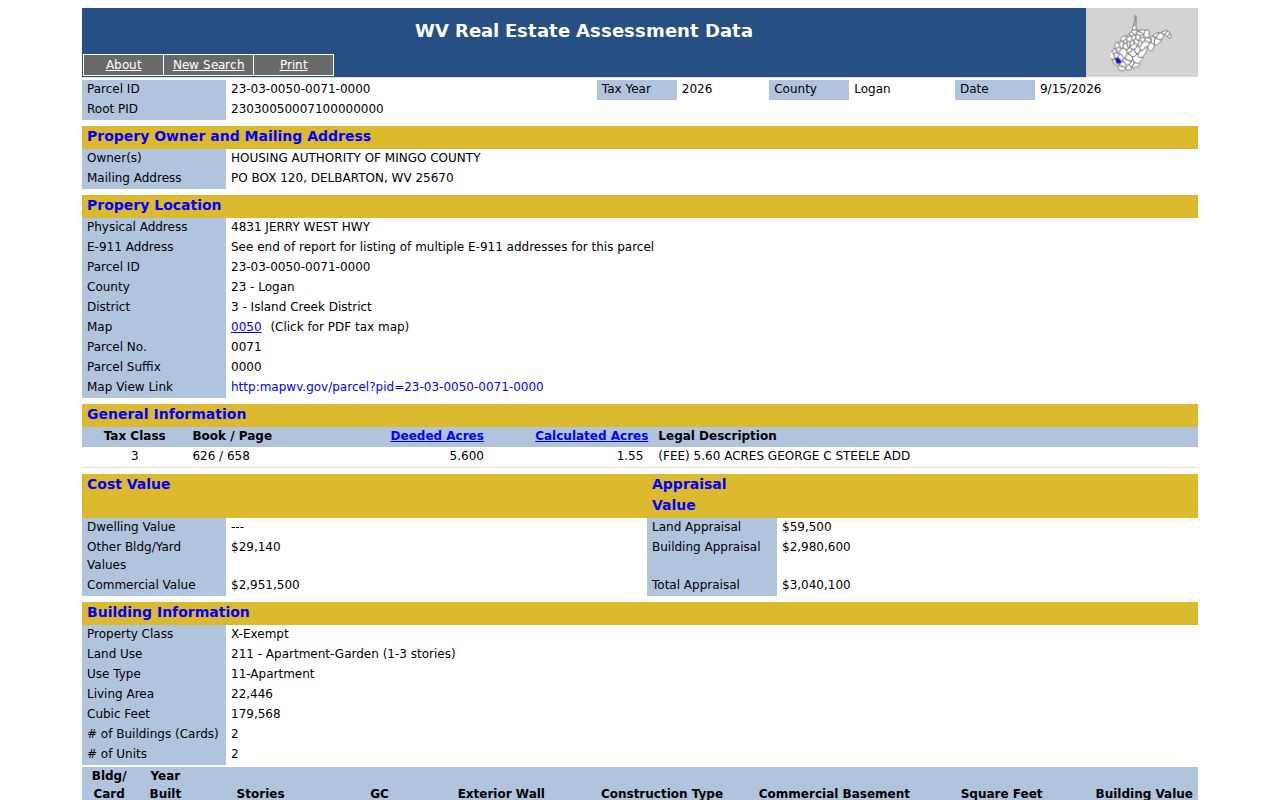
A sample shows the layout; always pull the current tax-year detail for the parcel you care about.
Getting a Mingo Tax Bill Status
Identify the parcel in the assessment system first. Then contact the Mingo Sheriff Tax Office for ticket and payment status. The sheriff serves as county treasurer for property-tax collection. The county's official page offers no tax-ticket lookup. It also lists no payment vendor, delinquency portal, or payment calendar. A direct call or visit is the safe route to a current balance. Avoid any unofficial payment page that turns up in a search result.
- Use the IAS address or parcel search to confirm the exact tax parcel.
- Write down the parcel ID, owner, property address, and tax year.
- Call the sheriff's tax office and ask for the ticket, paid status, or amount due.
- Ask whether a delinquent list or sale process applies and what record confirms that status.
- Assessment roll
- The assessor's record of parcel ownership, class, description, and value.
- Assessed value
- The value used in the property-tax system under the state assessment rule.
- Tax ticket
- The sheriff's bill and collection record for a tax year.
- Delinquent list
- A statutory list of taxpayers whose property taxes remain unpaid at the relevant date.
Mingo Tax Tickets Follow July 15
The West Virginia Tax Division says annual tax tickets issue on or after July 15. That timing follows the July 1 assessment date and keeps the tax bill distinct from the record of a deed transfer. If the ticket's owner or parcel text appears unfamiliar, compare the legal description and parcel number with IAS before calling the sheriff. Keep the bill year separate from a later payment date or a more recent recorded conveyance.
For delinquent real property, West Virginia Code §11A-2-11 directs the sheriff to prepare lists by May 1 following the assessment year. The list is arranged by district and then by the person charged, and reflects delinquency as of April 30. A list entry is not the same as an immediate sale. Tax sales, redemption, later state sale, and deputy-commissioner proceedings have distinct steps. The current Mingo publication channel and sale calendar were not verified, so ask the sheriff and State Auditor for the parcel's present status.
The research captured the state tax portal's calendar information.
Read the West Virginia property-tax schedule for assessment, appeal, and ticket timing.
The separate state Treasury landing page captured for tax-office research is West Virginia Treasury.

The Treasury page is only a general state reference.
Mingo Exemptions Need Assessor Review
Exemptions can change the amount subject to tax. The assessor's office decides what applies in Mingo County. It publishes no complete online eligibility list, application form, filing deadline, or proof requirement. Never assume an exemption is already attached. Ask the assessor which exemption fits the specific record. Ask also what documents are needed. The assessor can explain how class, owner, and use fields affect the displayed roll.
When an exemption is missing or an owner address has changed, note the tax year and parcel ID before calling. A post-office box is often the mailing route. The situs is the property's physical location. If a recent deed transferred the property, ask whether the roll update and exemption record are keyed to that deed and tax year. An exemption question concerns taxable value and eligibility, not an estimate of what a property would sell for.
State Reports Add Mingo Value Context
The West Virginia Tax Division publishes ratio studies and trend and depreciation tables. It also publishes classified valuation material and county-district publications. These sources show how a local assessment fits the state's uniform system. They are not a bill. They are not a parcel-specific appraisal either. A Mingo owner should compare the correct year and class. Then ask the assessor which state table or local evidence applies to that parcel.
Mingo County publishes no county-specific revaluation calendar or trend figure online. Avoid calling a district rising or falling based on one sample parcel. Statewide figures describe the assessment framework. A parcel's land and building rows, exemptions, and tax ticket remain separate records. For those studies, open the Tax Division forms and publications. The studies cover methods, not individual parcels. When contacting staff, ask about the issue. Is it the roll value, a classification, an exemption, or the bill balance?
Request a Missing Mingo Tax Record
Not every Mingo document is posted online. Contact the custodian directly. For roll fields and exemptions, start with the Mingo Assessor's office. The sheriff's tax office handles tickets, payment, and delinquency. Provide the parcel ID, tax year, situs address, and owner name. Staff can then find the right entry. The county offers no online ticket portal, payment vendor, or sale-calendar link.
For a public record not posted, West Virginia Code §29B-1-3 allows a written request to the custodian. The office must respond within five days, excluding weekends and legal holidays, by providing access, arranging an inspection, or issuing a written denial. The office may recover actual reproduction cost. It cannot charge for search or retrieval labor. Ask whether a paper tax list or certified copy has a separate process.
Appealing a Mingo Assessment
A Mingo property owner who disputes an assessment should contact the assessor and follow the county Board of Equalization and Review calendar. The state tax page sets a statutory window. The board begins its work on February 1, may adjourn after February 15, and must adjourn by February 28. Actual county meeting dates vary within that window. Confirm the schedule with the assessor before filing, and ask where the current forms and submission instructions are posted.
Prepare the parcel number, tax year, assessed land and building amounts, and the reason the value appears wrong. Comparable property information, a legal description, and a clear account of a parcel change can help. The appeal addresses the assessment. It does not review the deed's recorded consideration. The wrong owner or lot may be shown. Explain that separately and ask what record can correct the roll.
File with the current year's county instructions. The state page carries the statewide dates. For current Board of Equalization and Review timing, check the official West Virginia appeal guidance.
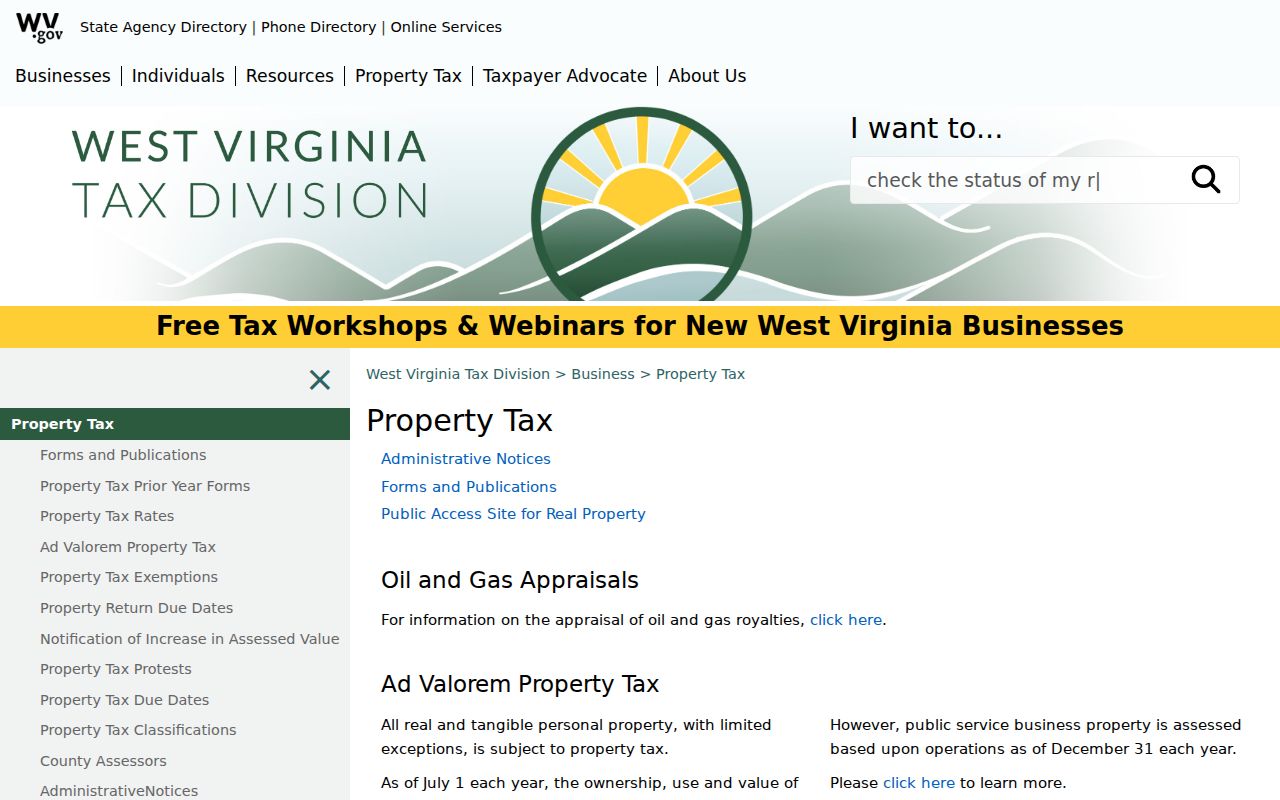
File with the county's instructions for the current year, and mind the statewide date window.
Appeal window. The review window starts February 1 and must close by February 28, though the county board may adjourn after February 15. Call the Mingo Assessor for the year's local meeting dates and filing steps.