
Trace a Mingo Property's Former Owners
Tracing a Mingo property's former owners means walking the grantor-grantee chain through the Mingo County Clerk's land records. Start with a grantee who received an interest in one deed. That same party usually shows up as the grantor when the parcel changed hands earlier, and each step backward in time adds another owner of record to the chain. The assessor's current book and page reference gives you a workable starting point, and the parcel's legal description keeps lookalike names and neighboring tracts from blurring together. Mingo County has not published a year span for its online coverage, so the sources here make no promise about how far back the records reach.
| Transfer point | Grantor to grantee | Record type | Reference to capture |
|---|---|---|---|
| Latest verified conveyance | Current grantor to current grantee | Deed of conveyance | Recording date, book/page, legal description |
| Prior acquisition | Earlier grantor to prior grantee | Deed or estate transfer | Name variant and same tract description |
| Land division clue | Original tract to later lots | Plat or map | Lot/addition name and clerk reference |
| Earlier jurisdiction | Pre-Mingo ownership link | Parent-county or land record | Jurisdiction and record series need confirmation |
Former owners come to light through the grantor-grantee chain in the Mingo County Clerk's land records. Each deed names a grantee who received the interest. That same party usually shows up as the grantor on the next transfer back in time. The assessor's current book and page gives you a solid starting reference. Meanwhile, the parcel's legal description keeps similar names and neighboring tracts from getting tangled. Mingo has not published its online start year. So treat any date span as unconfirmed until the clerk says otherwise.
Mingo's Online Cutoff Is Not Published
The Mingo land-record site names its document classes. But it publishes no earliest indexed year and no online image cutoff. No courthouse fire or records loss appears in the county's own history. So a search that ends online marks a limit of the interface. It is not proof that older records are missing. Ask the clerk which deed book, microfilm run, or index series covers your date range. Ask about names, too.
Mingo County was organized in 1895. Any chain reaching before that year may pass through the parent county. It may also pass through state and federal land sources. A definitive first deed book or catalog call number is not established. When you contact the clerk, give the current parcel description. Include any known book and page, prior owner names, and a date range. That detail lets staff tell a Mingo volume from a record filed under an earlier jurisdiction.
Open the Mingo County land-record landing page and ask about online coverage and older books.
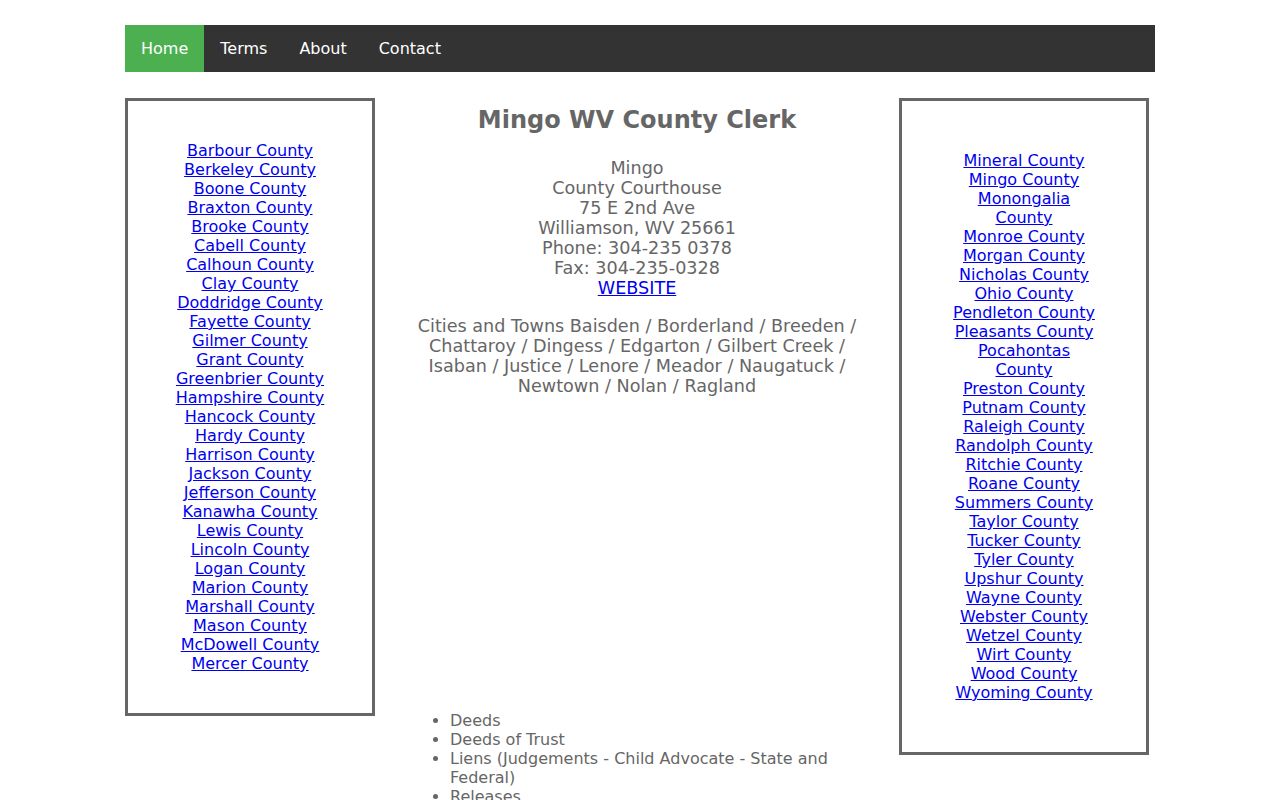
The land-record landing page shows the index entry point and the available document classes. It does not display a full historical date range.
Do Not Stop at the First Grantor
Backward tracing can branch in surprising ways. A deed may convey only the surface interest. It may reserve minerals for an earlier owner. It may also bundle several tracts at once. A release can clear a security interest without changing who owns the land. Assignments, deeds of trust, trustee reports, probate transfers, partitions, and plats may all explain why one name appears in more than one role. Read the full legal description. Note every exception before treating the sequence as one simple sale chain.
Coal-era descriptions in Mingo often split surface and mineral estates. The GIS parcel shape alone does not prove that both interests share an owner. Track each right through the recorded instrument. Check the related lien or court record if a foreclosure or estate transfer altered the chain. When a current record cites a book and page, request that exact filing first. Avoid searching broad names with no parcel anchor.
Walk the Mingo Deed Chain Backward
Start from the current owner. Or use the parcel's IAS book and page to find the newest deed. The grantee on that instrument is the owner who received the recorded interest. The grantor points you to the prior transferor. That transferor's own acquisition deed names an even earlier grantee. Each step must match the same land, not just the same family or company name. Record dates and references as you go. If a gap appears, mark it rather than filling it with a guess.
- Find the latest deed tied to the parcel and copy its grantee, grantor, date, and reference.
- Search the grantor's name as a grantee in the prior acquisition.
- Compare the legal description, acreage, lot, and reservations at each link.
- Check releases, assignments, trustee reports, and estate records that affect the same tract.
- Ask for older books or archives when the online record trail ends.
- Grantor
- The party transferring an interest in the recorded document.
- Grantee
- The party receiving that interest.
- Chain of title
- The ordered record of transfers and related land instruments.
- Legal description
- The land description used to match an older deed to a parcel.
Mingo History Can Reach Before 1895
Mingo County was formed in 1895. A chain crossing that boundary may lead into earlier county books or public land sources. The county's own index cannot establish ownership before the county existed. Coal development, river settlements, and later roads also shaped many old tracts. They may be described by water, ridge, acreage, or a former route instead of a street number. Treat today's address as a locator. Then use the deed description to find the older land reference.
The State Archives and History Library is the official referral for older vital and historical materials. The Mingo County Public Library may hold newspapers, county histories, maps, and family files. Genealogical and historical societies may hold them too. The library system has not published its city-directory years or obituary coverage. It has also not published its oldest deed book or microfilm holdings. Ask staff for a town, a road, a former owner, and a time range. Keep historical context separate from proof of conveyance.
Estate Names Change Along the Mingo Chain
Some former owners reach a Mingo County parcel through probate or a representative. That changes how names look in the property records. Search the person as both grantor and grantee. Then try phrases like "Estate of," executor, administrator, trustee, heir, or personal representative where the file supports the role. The circuit clerk may hold the appointment, will, inventory, or sale authority. The county clerk records the deed that follows. A will alone does not prove any particular parcel moved.
West Virginia Vital Registration keeps genealogy series for births, deaths, marriage indexes, marriage records, and divorce indexes. Start dates and eligibility rules differ. Those records can build a timeline or confirm an identity, but a vital record is never a title document. Certified copies cost $12 under the state's request rules, which require identification and mail delivery. For historical work, lean on the older genealogy series or archives instead of a current ownership check. See the West Virginia genealogy record series and the Archives referral for older vital material.
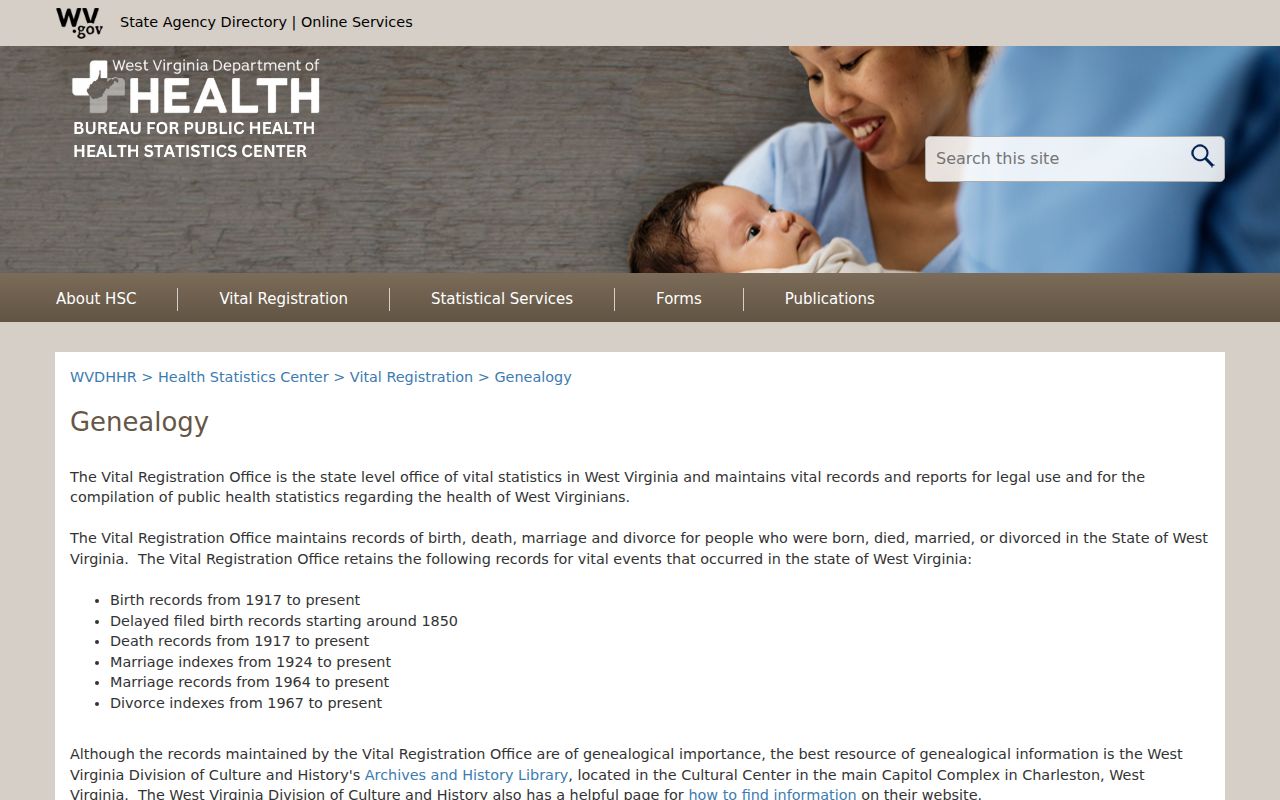
Genealogy records add identity context; the recorded Mingo County deed or court order remains the land-transfer evidence.
Search Mingo Prior Names Carefully
A prior owner may hide behind initials, a changed surname, a company name, a trust, or an estate representative. Search both grantor and grantee roles. Then compare the legal description and recording reference. Mingo's live index name order and partial-match rules are unconfirmed, so one missed spelling does not mean the transfer is absent. Ask the county clerk how its current index handles name variants.
Road names shift too. An older Mingo County deed may point to a creek, ridge, acreage figure, lot, or tract rather than a modern street address. Anchor the parcel through its current legal description and recorded plat. Local newspapers and library collections can supply a historical name or former address. Still, the clerk's land record is the proof of a transfer.
How Far Mingo Ownership Records Reach
No one has pinned down the online cutoff year for Mingo County ownership records. The land-record landing page does not name the first digital entry or earliest image. The clerk's physical books and archive routes may reach further back. The oldest book, microfilm coverage, and catalog references all require confirmation. A property chain should stop at a documented record, not an assumed digitization date. When a prior deed will not surface, keep the gap visible. Ask the clerk or archive which index sequence covers that period.
For each prior owner the property records verify, save the deed date and party names. Record the book and page, document type, and legal description. Note any mineral or surface exception too. That working trail lets a title professional see what the records establish. It also shows where they stop. Use public records for lawful house history, estate work, and property diligence. Keep protected personal details out of unrelated inquiries.
Lawful use. Trace past Mingo ownership for house history, estate matters, and property diligence. Do not use a former or present owner's name to track, stalk, harass, intimidate, or harm anyone.