
How Mingo Property Records Fit Together
Most Mingo County property searches begin in the West Virginia Real Estate Assessment system, known as IAS. It works from several angles. An E-911 address, an owner name, or parcel attributes can all land on the same parcel detail page. That page lists the owner, the mailing address, the legal description, a book and page, and values by tax year. The WV Property Viewer adds map and geometry tools. Ownership is a different question. For what changed hands, the Mingo County Clerk's land-record index is the next stop. Tax matters go to the sheriff. The county publishes no online ticket link, so payment and delinquency questions run through the sheriff's tax office.
Geography matters here. River valleys and town edges complicate things. A mailing city often differs from the parcel's situs. Check every result. Compare the parcel number and legal description across offices. A deed records a conveyance, an assessment roll reports the assessor's owner and value fields, and a GIS line merely locates the land. None of them alone certifies clear title, proves a boundary, or shows a fresh closing in the roll.
- Enter the full E-911 address in IAS; if it misses, try the street name by itself.
- Save the parcel ID, owner, mailing and physical addresses, legal description, and book/page reference.
- Open the WV Property Viewer, then compare its parcel location and displayed details with IAS.
- Use the book/page or party names in the Mingo clerk's index to find the recorded deed or related instrument.
- Ask the sheriff or the record custodian for tax, court, or paper records that are not exposed online.
Where Mingo Keeps Land Records
Mingo County splits its land records across several offices. The county clerk holds the deed records: deeds, deeds of trust, liens, releases, plats, assignments, affidavits, cemetery deeds, church-trustee papers, and trustee reports of sale. The assessor keeps the tax roll and parcel detail. The sheriff collects property taxes. State GIS and assessment systems put much of the basic parcel work online, while a court clerk holds case files and a town office keeps its own permit or zoning papers.
For in-person or phone help, Mingo County Clerk / Land Records sits at 75 E. 2nd Avenue, Williamson, WV 25661, phone 304-235-0378. The assessor works from the courthouse at 304-235-0310; the sheriff's public contact is 304-235-0300. Circuit Court Clerk Lonnie Hannah is at 78 E. Second Avenue, Room 232, Williamson, phone 304-235-0320. Call ahead to confirm copy procedures and counter hours before making the trip.
Records in the Mingo Property File
Each row answers a question. The table sorts the main Mingo property records by what they tell you. One search may cross several rows. Still, the office that created a record is the office that can confirm it, and an assessor parcel card pointing to a deed book and page never replaces the clerk's recorded instrument as the conveyance record.
| Record Type | What It Documents | Kept By | Access |
|---|---|---|---|
| Deeds and plats | Transfers, legal descriptions, plats, and book/page references | Mingo County Clerk | Index landing page; ask the clerk about images and copies |
| Trust deeds and liens | Security interests, judgments, releases, and assignments | Mingo County Clerk | Search party names and confirm the instrument |
| Assessment roll | Owner, mailing address, legal description, tax class, and values | Mingo Assessor / IAS | Statewide online search |
| Tax status | Tax tickets and delinquent-list material | Mingo Sheriff | Ask the tax office; portal not verified |
| Parcel geometry | Mapped parcels, location, and GIS detail | WV Property Viewer | Online viewer and clearinghouse maps |
Match the record to the question. For a confirmed transfer or a recorded burden, use the deed index. The assessment detail shows who appears on the roll. It also shows how the current tax-year value splits. Orient the parcel on the map. Then return to the deed and plat for the legal boundary. Tax bills go through the sheriff. Mingo offers no online ticket search for balances or sale questions. City offices add permits, zoning, and street history. For instrument types and copy-cost rules, see Mingo County deed records.
Mingo Address Search Has Two Paths
IAS splits address search into two modes. One matches an E-911 address. The other searches property-address text. With a known situs, type the full street, town, and state into the E-911 mode for the most precise hit. Rural routes and post-office boxes fail there. They describe mail delivery, not the mapped location of a parcel. A blank result is not the end. Drop to the street name alone in property-address mode, since IAS address text runs incomplete at times. A miss does not prove much. The parcel may still exist in Mingo.
Owner search accepts partial names. The documented format is LASTNAME FIRSTNAME, and punctuation or initials can shift what appears. Parcel-attribute search asks for Mingo County plus district, map, parcel, and an optional suffix. Keep the leading zeros. A displayed ID may carry separators the IAS field rejects, so enter one continuous number. The assessment screen lays out every route into a Mingo parcel record, and the WV assessment search shows its county, search-type, owner, address, and parcel modes.
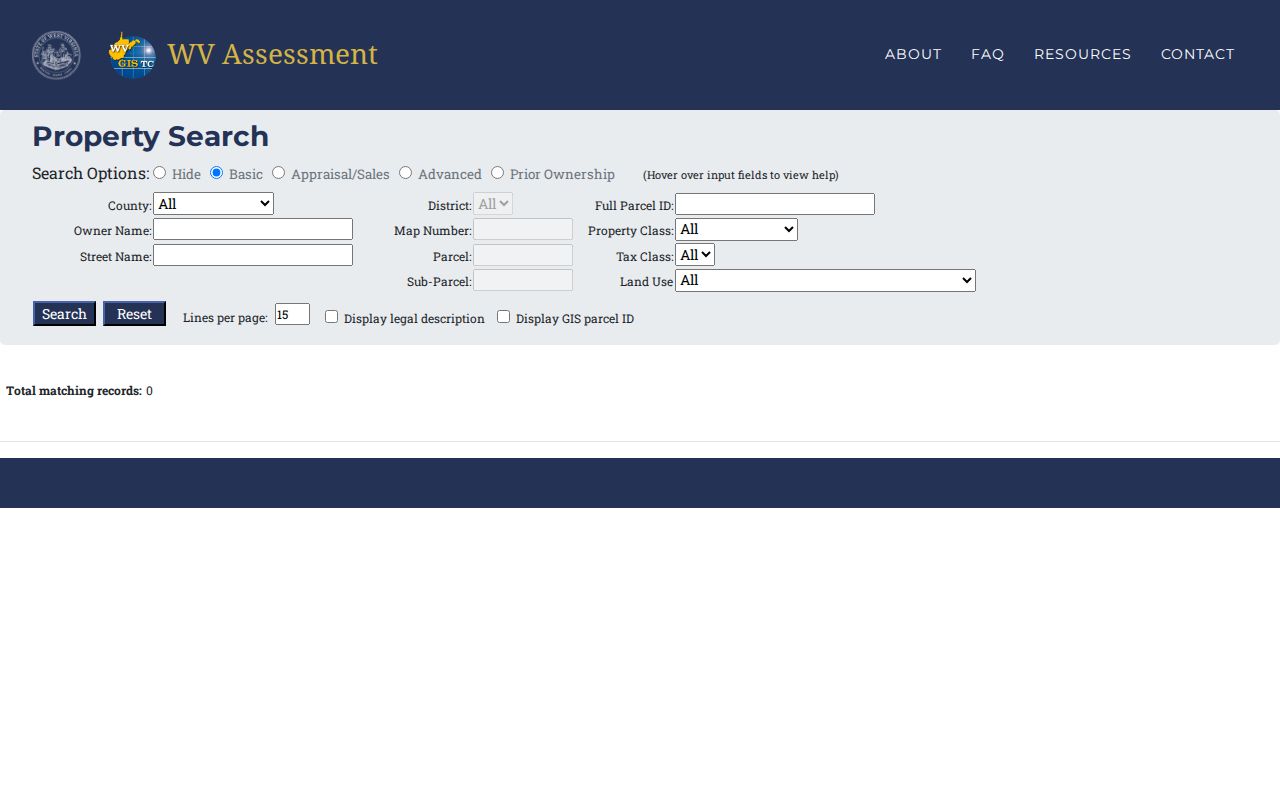
The search mode only picks the starting key. Before carrying a result into another office's index, compare the parcel detail itself.
What a Mingo Parcel Detail Connects
A Mingo assessment record carries more than a value line. It ties an owner name and mailing address to the parcel's legal description. It also links a book/page reference on file with the county clerk. Those fields let you trace a parcel from the assessor's roll back to the deed. That deed supports it. Land, building, and total values belong to one assessment year. They are not sale prices. The owner shown may lag a newly recorded deed. It may also omit a co-owner in a map result.
One parcel shows the pattern. The Housing Authority of Mingo County holds record ownership. It lists a mailing address at a Delbarton post-office box. Book/page 626/658 sits beside the legal description of 5.60 fee acres in George C. Steele Addition. For tax year 2026 the detail lists $59,500 in land. It shows $2,980,600 in building and $3,040,100 total. Its history spans tax years 2022 through 2026. Treat the figures as an example, not a countywide benchmark.
To see it all in one place, view the Mingo assessment detail for that parcel. There, owner, mailing address, legal description, book/page, and tax-year values share a single record.
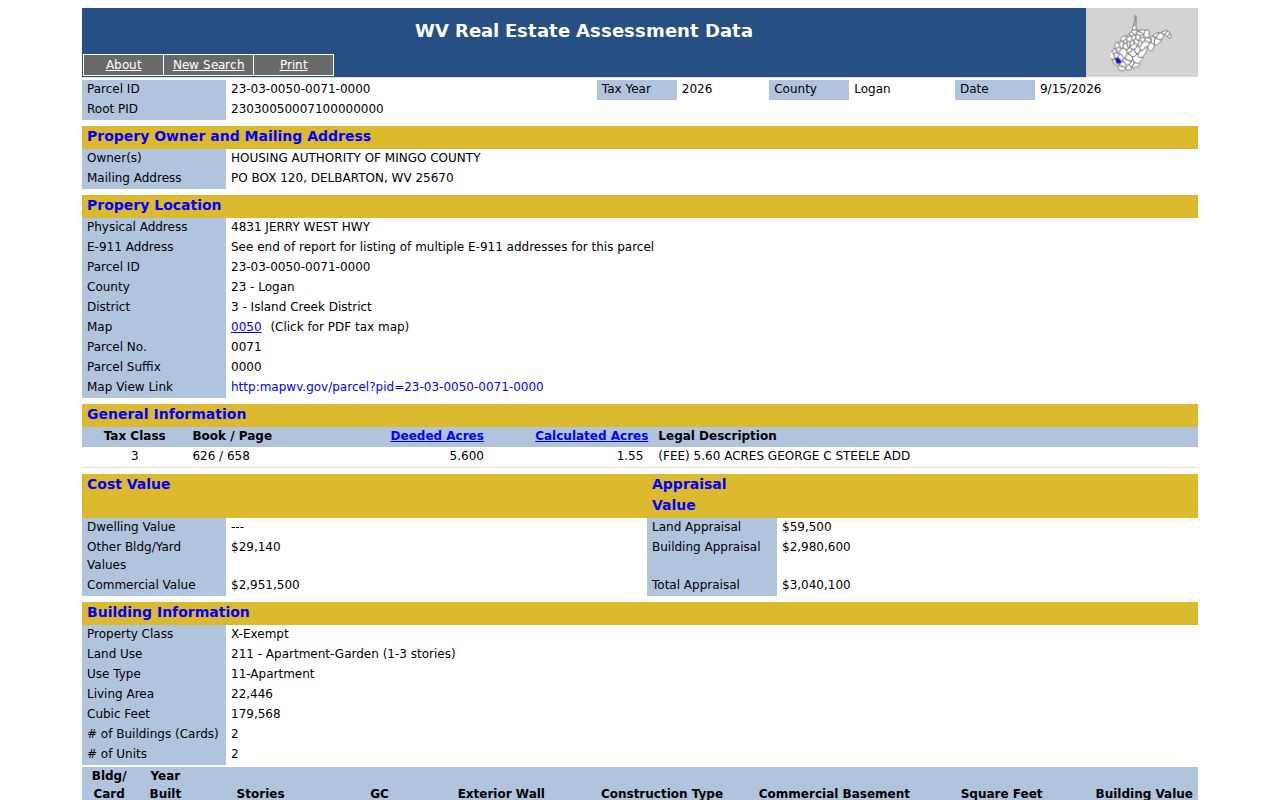
This record is an interface example only. Rely on the current record and deed for the parcel you are studying, not on this sample's values.
Mingo GIS Shows Location, Not Title
The WV Property Viewer pairs state parcel geometry with assessment data. You can search by E-911 address, parcel attributes, map geometry, or coordinates. Parcel lines draw once the map reaches roughly 1:18,056 scale. Hover a result row and the shape highlights. Clicking can zoom to the parcel and open its basic information. A parcel stacked with another level may display incompletely. One with missing geometry may display oddly.
Results can run to 1,000 rows, and CSV export is available. That cap matters when a broad owner or street search pulls a big set. Narrow things by district, map, street, or a tighter map area before trusting what you see. Mingo parcel IDs follow district, map, parcel, and suffix segments. That helps match an IAS result to the map. Treat the GIS map as orientation only. Deeded acreage and the deed's legal description control the recorded conveyance. A licensed survey settles any boundary dispute.
Mingo Values Follow a State Rule
West Virginia law sets assessments at 60% of true and actual value. Ownership, use, and value are measured each July 1. Mingo's IAS detail splits land, building, and total value and can display several tax years side by side. Those figures drive the tax roll. They do not predict a sale price. Nor do they replace a formal appraisal.
Tax tickets go out on or after July 15, according to the state tax page. A disputed assessment starts with the Mingo assessor. The Board of Equalization and Review sets the appeal calendar. The county board opens its review window on February 1. It may adjourn after February 15. It must adjourn by February 28. Meeting schedules vary by year. Confirm the current schedule with the county instead of trusting a past date. Exemptions can change the taxable amount, so ask the assessor which application and proof fit your parcel.
Note: The July valuation date and the later ticket cycle mean a closing date and a tax-roll owner field can land in different record periods.
Mingo Delinquency Records Need a Phone Check
The Mingo County Sheriff acts as the county treasurer for property-tax collection. The sheriff's public site is a contact point, but the research did not locate a verified tax-ticket lookup, payment vendor, delinquency portal, or sale calendar. Call the tax office before sending money or relying on a web page that claims to sell Mingo tax data. A tax balance question and a title question are separate: a delinquency entry does not show who acquired title, while the deed index does not confirm that a bill was paid.
West Virginia Code §11A-2-11 directs the sheriff to prepare delinquent lists by May 1 after the assessment year. The list is arranged by district and by the taxpayer charged, with delinquency measured as of April 30. Later steps can involve a sheriff sale, redemption, state sale, or deputy-commissioner process. Those paths have distinct dates and rights. Ask the sheriff and State Auditor for the current case status and instructions rather than treating a published delinquent list as notice that land is immediately available.
Mingo Records Start in 1895
Mingo County was born in 1895. Williamson has served as the county seat ever since. That year marks the practical edge of local deed records, because any chain of title reaching further back may call for parent-county, state, or federal land research. The county's land-record page lists deeds, plats, deeds of trust, liens, releases, cemetery deeds, assignments, affidavits, and foreclosure trustee reports. It publishes no earliest online year or image cutoff. A modern web index should not be assumed to cover every deed book. Ask the clerk which deed books are digitized.
The Mingo County Public Library is a practical offline stop for older house history. The system opened in downtown Delbarton in 1963. Four years later it moved to its current site. Branches now operate in Matewan, Gilbert, and Kermit. Ask staff about local newspapers, microfilm, county histories, Sanborn maps, city directories, obituaries, yearbooks, and genealogy databases. Request holdings by town, street, and date range. The Mingo County Genealogical and Historical societies and the West Virginia Archives can help with older material too. See the Mingo County Public Library's official details for the Delbarton headquarters and branch contact information.

The library adds address context to an older parcel trail. For recorded transfers, the Mingo clerk remains the source.
State Court Search Adds Another Trail
Some property questions land in court. Mingo County sits in the 11th Circuit. WVPASS, the statewide circuit search launched in 2025, covers those filings. Registration plus a nominal download fee may apply. Request archived or certified material from the Mingo Circuit Clerk. So search by party and case number first. A docket entry can flag a foreclosure, lien dispute, or other property case. A docket, however, is not a deed and proves no title by itself.
The Magistrate Case Record Search takes a different shape. It is free, statewide, and needs no registration. Enter a name or case number. The tool returns up to 30 records with docket details such as filing date and disposition. The documents themselves stay offline. Contact the local clerk for copies.
West Virginia's Freedom of Information Act, W. Va. Code §29B-1-3, backs up any hunt for unposted Mingo or municipal records. Send a specific request to the custodian. The custodian must respond within five days, excluding weekends and legal holidays, by providing access, setting a time and place, or denying the request in writing. Only actual reproduction costs may be charged, never staff search time. Read the West Virginia FOIA statute for the inspection, copy, response, and fee rules that apply to public records.
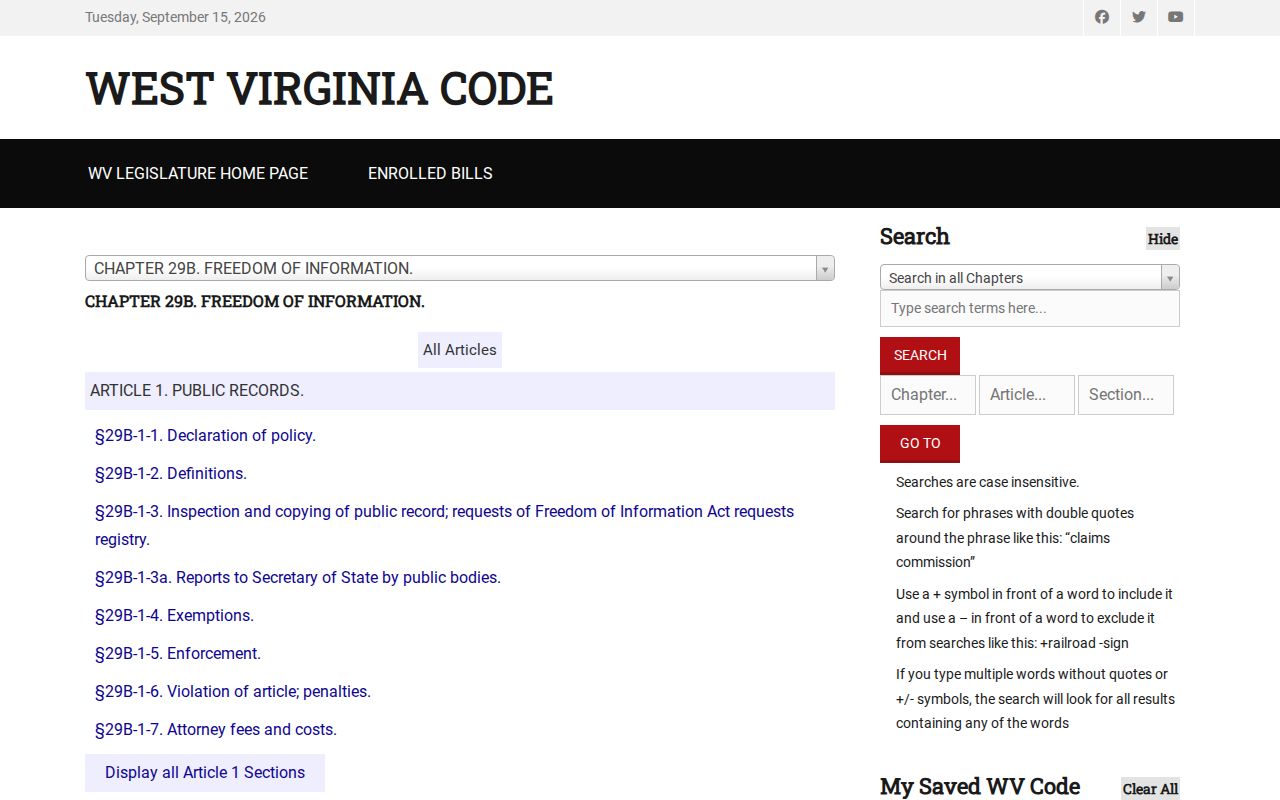
A clear address, parcel ID, record type, and date span help the Mingo custodian find the right file. Vague requests stall.
Mingo City Records Need Town Requests
Williamson, Delbarton, and Matewan keep their own municipal offices. Town hall covers permits, zoning, street history, and ordinances. It never replaces the county clerk. The same goes for the Mingo assessor. The state municipal directory lists Williamson at 142 East 4th Avenue, Delbarton at PO Box 730, and Matewan at PO Box 306. No searchable permit portal exists for these towns. A written, address-keyed request is the practical route.
For any town record, include the property address, parcel ID, permit or subject type, and date range. West Virginia FOIA requests go to the public custodian and must be specific enough to identify the material. Town records can explain a building change, a street number, or an annexation. The county deed and tax parcel still anchor the land and assessment facts. Check the West Virginia municipal contact directory before contacting a Mingo town office.
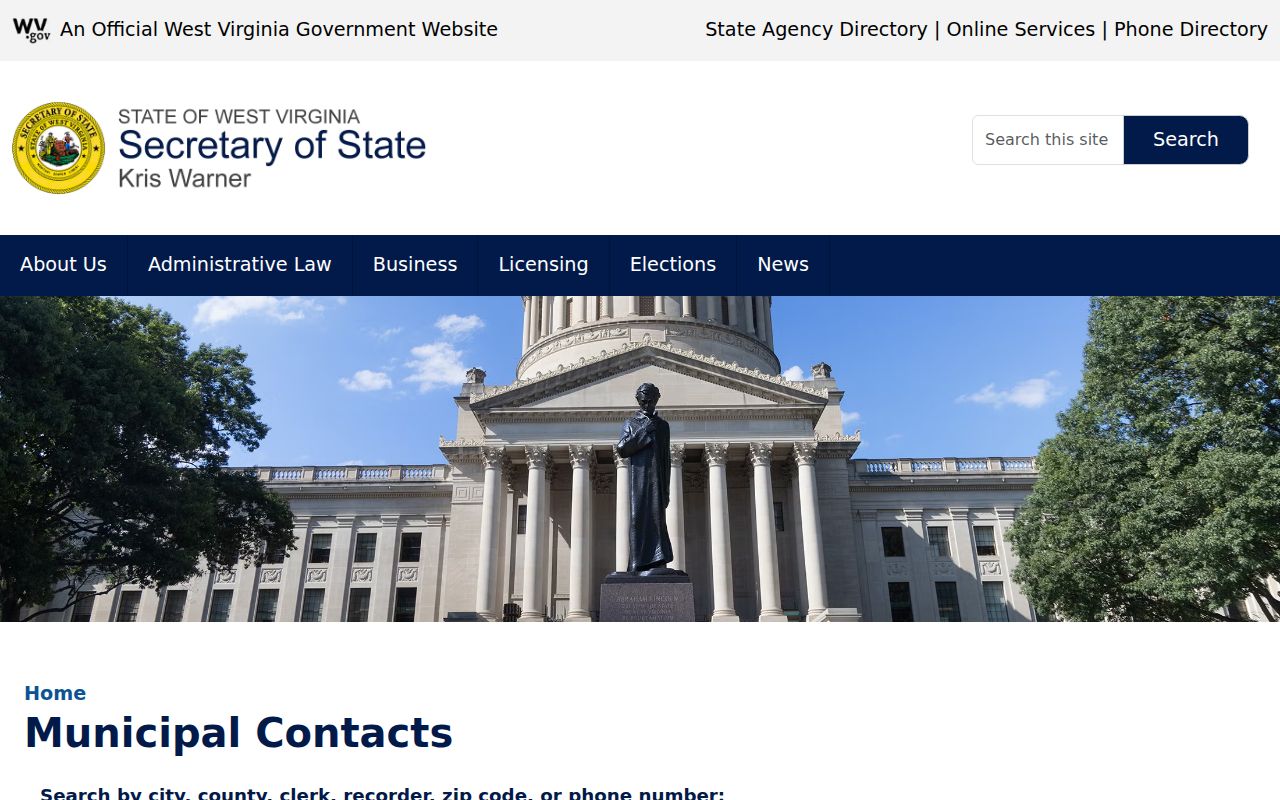
The directory is a contact route only. It is not a searchable city land-record system. The official 2020 Census incorporated-place table gives Delbarton a count of 422 and Matewan a count of 412.
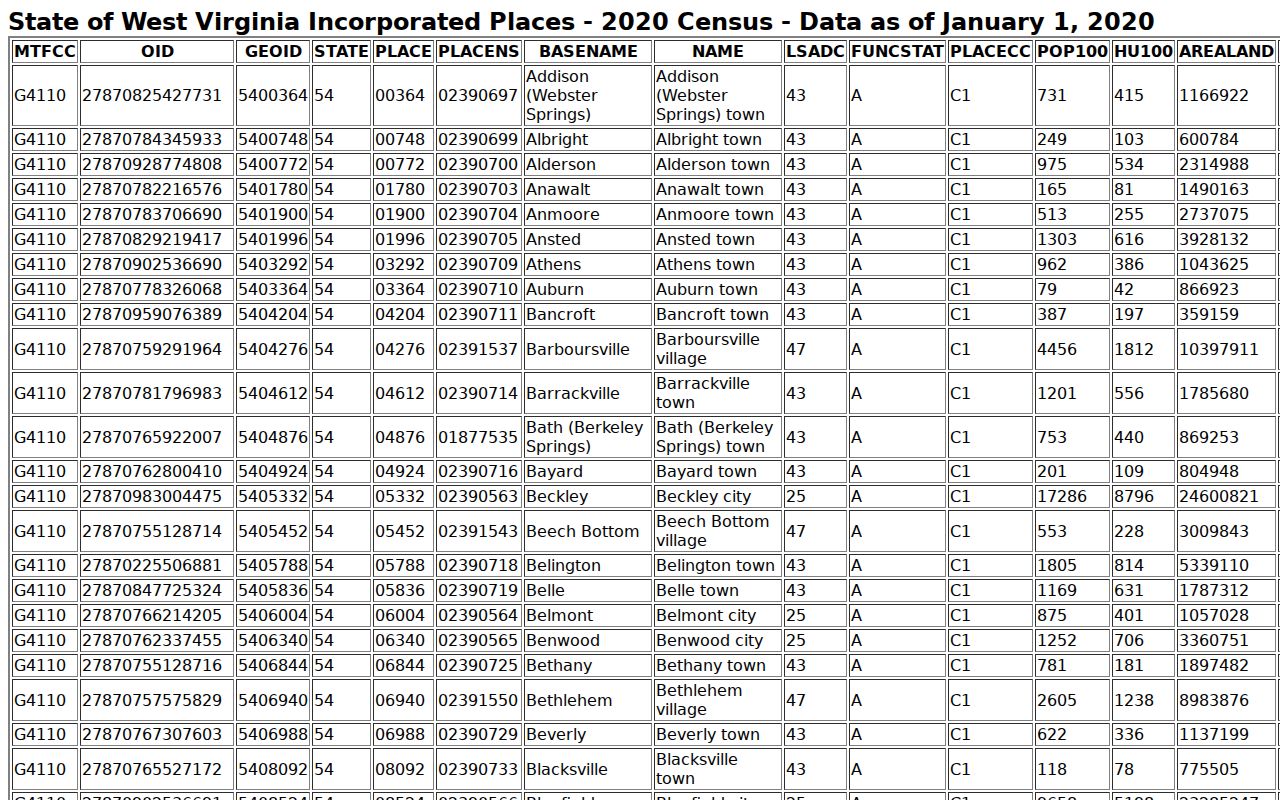
Place counts give civic context only. For a specific property's location, rely on parcel records and official town boundaries instead of population figures.
Limits of Mingo Property Records
Mingo County property records can support a purchase review, an estate file, a tax appeal, a boundary question, or a dive into a property's history. They also carry privacy limits. The clerk marks military discharges as restricted. Birth records stay confidential for 100 years. Sealed or otherwise protected court files never surface as ordinary public records. Never infer a protected person's location from other data. If an address appears shielded, ask the custodian what public version can lawfully be released.
Watch for deed scams. Some letters demand a fee for an "official deed copy," and fake delinquent-tax payment links and unclaimed-money fee requests circulate too. So do callers posing as sheriff or court staff. Verify any contact through the county or state office's own directory before paying. Ask the clerk whether Mingo County offers a property-fraud alert service. A parcel owner display is not permission to approach, track, or publish details about a person.
Lawful use. Mingo property records are for lawful property research, due diligence, estate work, and civic use. A records lookup is not a title opinion or survey, and owner details must never be used to stalk, harass, intimidate, or harm anyone.